|
|
The Department of Statistics |
 |
 |
The RERF Statistics Department provides statistical
support to RERF research activities, conducts basic research on
statistical methodology applicable to environmental risk assessment,
and performs radiation risk analysis using state-of-the-art methods
and software to produce radiation risk estimates used in radiation
protection worldwide.
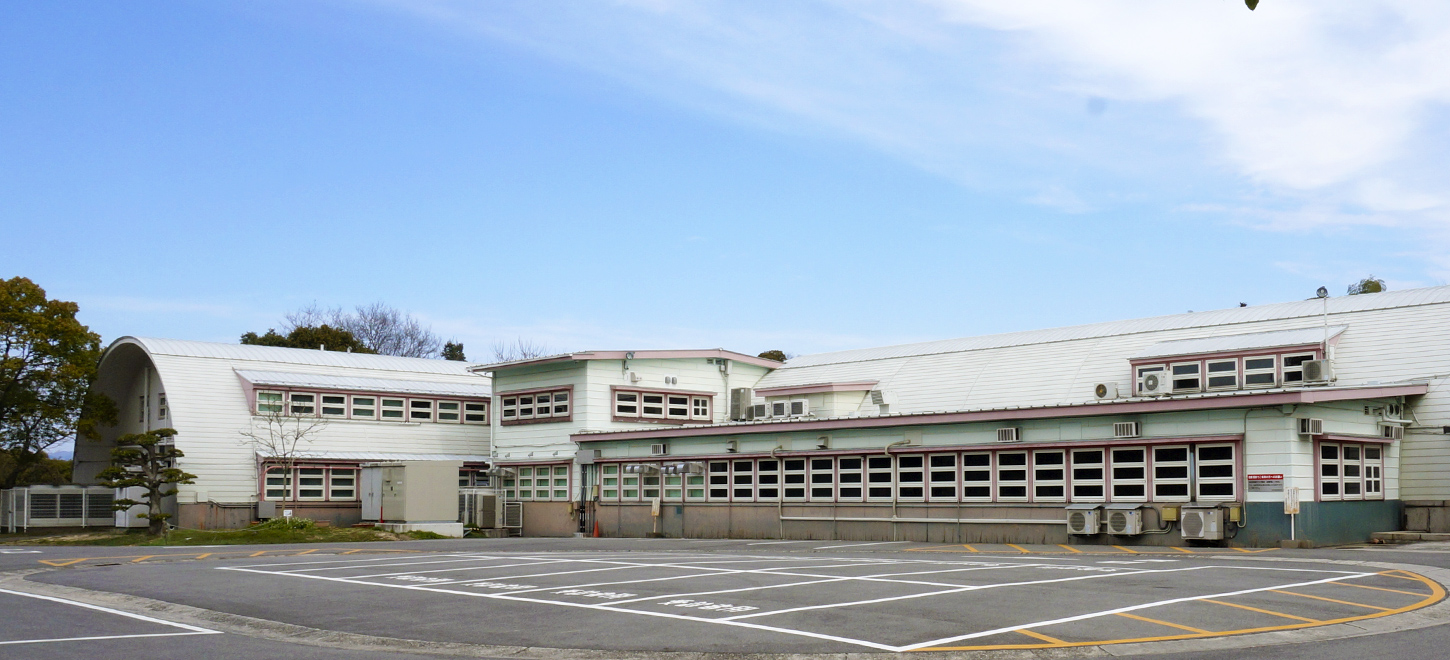
We are in the Hiroshima Laboratory of RERF, located atop Hijiyama
Mountain, not far from downtown Hiroshima. The buildings are old,
but inside we have the latest in computer technology, software,
and Internet connection. Hijiyama also affords a spectacular view
of Hiroshima and splendid cherry blossoms in the spring.
The Department of Statistics provides statistical support for all
research activities at RERF through collaboration with researchers
from other departments on study design and analysis. RERF statisticians
also carry out research on many of the important and challenging
statistical problems that arise in the course of analysis of the
atomic bomb survivor data. Statistical research topics of ongoing
interest include the development of the statistical methods, models
and software for the analysis of survival data (e.g., data on cancer
death rates over time); development methods that provide clear and
useful summaries of the often subtle and complex radiation effects
seen in the survivors; assessment of and adjustment for the effect
of errors in survivor dose estimates on risk estimates; the analysis
of over-dispersed data that is seen for many biological endpoints
considered for evidence of the effects of radiation; and the development
and application of methods for the analysis of longitudinal data
from the clinical program; design and analysis of family studies;
and pattern recognition problems involved in the search for evidence
of radiation-induced mutations at the DNA level.
The department is also responsible for the management of the dosimetry
system. This work includes: organization and management of the data
and computer programs used for dose estimation and the computation
of dose estimates for survivors in the RERF study groups. |
FY2008 Research Highlights
 |
Continuation of radiation research and risk assessment
Recent studies involve risk assessment for cataracts, cardiovascular disease,
and thyroid disease among individuals exposed in utero. Methods continue to be developed for applying Bayesian models for estimating
risk using individual data. Research has been initiated on geospatial hot
spotting, which has the potential to provide a way to detect spatial patterns
in disease outcomes not suggested by current risk and causal models. A
new study was initiated on measurement and calculations of atomic-bomb
dosage to tooth enamel using spectral deconvolution in the signal processing
and analysis of RERF's data on electron spin resonance (ESR) measurements
and extension of DS02 to calculate dose to teeth.
Methodology
We have joined outside collaborative efforts on mechanistic models of carcinogenesis
focusing on two-stage clonal expansion (TSCE) models of carcinogenesis
and leukemogenesis. Under an RERF cooperative agreement with Kurume University,
we are continuing to apply joint modeling in examining the causal associations
between radiation, inflammatory markers, and postoperative cataract incidence
for AHS subjects. Also applied are nested case-control studies with risk
set-based subject selection and counter-matching in an effort to increase
the power of RERF statistical designs to detect radiation effects and interactions
between important risk factors. |
|
Seminars
Resources
Links |
Research Scientists and their Research
Interests |
 |
Harry M. Cullings, PhD,
Acting Department Chief
| Radiation dosimetry, biodosimetry, and dose uncertainty |
| Geospatial analysis |
| Radiation risk models |
| Statistical consulting |
Eiji Nakashima, PhD,
Assistant Department Chief
| Overdispersion |
| Statistical methods for longitudinal data analysis
|
| Consulting |
Kyoji Furukawa, PhD
| Spatial statistical modeling and analysis of environmental
data |
| Computational statistical methods |
| Bayes Methods and applications to epidemiology |
Wan-Ling Hsu, PhD
(Fixed-term Research Scientist)
| Inflammatory indicators and radiation on cancer and
cardiovascular diseases |
| Risk assessment of radiation and epidemiological risk
factors on A-bomb survivors |
| Applied statistical analyses of clinical studies |
Munechika Misumi
(Fixed-term Research Scientist)
| Multivariate survival analysis |
| Multistage carcinogenesis models |
| Statistical consulting |
John B. Cologne, PhD
(Fixed-term Research Scientist)
| Statistical methods in environmental and public health risk assessment |
| Design of studies conducted within epidemiologic cohorts |
| Analysis of clinical and epidemiologic data on health effects of atomic-bomb
radiation |
| Probability of causation |
Consultants
·Donald A. Pierce
·Dale L. Preston
|
 |
|
 |
|